

Heat Pump Maintenance in Nokomis, FL
Heat pumps demand consistent care because they run in heating mode half the year and cooling mode the other half — more than twice the cycling of a traditional AC-only system. Regularly scheduled maintenance catches early warning signs: slow refrigerant leaks, aging capacitors, airflow restrictions, and electrical creep. Small problems caught early prevent expensive emergency breakdowns down the road. At Superior Heating and Cooling, our maintenance plans keep your heat pump performing at its best with regularly scheduled professional care. Both residential and commercial plans are available — contact us for current plan details and pricing.
Get Connected with Us
Why Superior Heating and Cooling for Heat Pump Maintenance
Proactive Condition Assessment, Not Just Filter Swaps
Our maintenance visits inspect far more than your filter. We measure refrigerant pressures, test electrical connections on compressor and blower, verify capacitor function, clean evaporator and condenser coils, check airflow balance across ductwork, and inspect the reversing valve. This diagnostic depth catches slow refrigerant leaks, corroded terminals, aging capacitors, and coil blockage before they become breakdowns. Early detection means low-cost fixes instead of emergency compressor failure.
Year-Round Operational Understanding
We’ve served Nokomis since 1958 and understand how Florida heat pumps perform across seasons. Regularly scheduled tune-ups — addressing both cooling-season and heating-season needs — match the rhythm of how your system actually operates. Our technicians know how to spot the early signs that prevent compressor strain in summer and keep heating reliable in the rare cold snaps. This ongoing discipline prevents the failures that plague neglected systems.
Preventive Care That Reduces Emergency Repairs
Regular maintenance catches small problems before they become expensive emergencies. Superior Heating and Cooling’s maintenance plans keep your heat pump performing at its best with regularly scheduled professional care. Both residential and commercial plans are available — contact us for current plan details and pricing.
Data-Driven Equipment Life Extension
Properly maintained heat pump systems tend to last significantly longer than neglected ones. Our maintenance records track your system’s condition over time — pressure trends, electrical behavior, coil fouling progression — so we spot patterns. If we see gradual performance decline, we can recommend targeted upgrades (a new thermostat, coil sealing, ductwork improvements) that help extend useful life rather than accepting premature replacement.
Local Accountability on an Ongoing Relationship
Superior Heating and Cooling isn’t a call-once-for-repair shop. Maintenance plan customers are part of our community. We know your home, your system, your family’s comfort needs, and what normal operation sounds like. That continuity means our technicians catch problems other shops might miss and remember your home’s quirks and history. When emergency service is needed, our team already understands your system completely.
Join Our Heat Pump Maintenance Program
Schedule your maintenance appointment today. We’ll conduct a comprehensive tune-up, document your system’s condition, and keep your heat pump operating at peak efficiency.
Our Heat Pump Maintenance Process
Maintenance Assessment Call & Scheduling
You contact us to schedule your maintenance appointment. We ask a few quick questions: Is your system running smoothly? Any unusual sounds, reduced airflow, or performance changes? Has anything come up since last service? This brief screening helps us prioritize — if you describe noises or reduced cooling, we know to allocate extra diagnostic time during the visit. We schedule your appointment and confirm the time window needed for a thorough tune-up.
Key actions in this phase
- Confirm appointment details and contact information
- Assess urgency: any recent problems or unusual behavior?
- Determine focus areas: cooling-season optimization or heating-season readiness
- Schedule appointment with clear time window and technician name
- Confirm access to outdoor unit, indoor air handler, and thermostat
Visual System Inspection & Filter Assessment
Our technician arrives with full diagnostic equipment. First, we conduct a comprehensive walk-around: outdoor unit condition (any corrosion, debris, icing, or vibration issues), refrigerant line insulation integrity, electrical connections at both units, thermostat display and mode settings, and air filter condition. We check for visible refrigerant leaks (oil stains), cracked fittings, or loose wire connections. We listen to the compressor, blower motor, and reversing valve. We verify the breaker and disconnect switch are secure and properly labeled.
We examine your filter — is it clogged with dust, pollen, or pet hair? A severely clogged filter reduces airflow, strains the blower motor, and wastes energy. We replace it if needed (or you can purchase filters from us and we install). A clean filter is foundational to maintenance; if you’re neglecting filters between visits, that’s the first habit to break.
Key actions in this phase
- Visual inspection of outdoor unit: corrosion, debris, ice, loose mounting
- Check refrigerant line insulation and connection fittings
- Inspect electrical connections at outdoor unit and indoor handler for corrosion or looseness
- Test thermostat: verify display, switch between heating and cooling, confirm scheduling
- Check breaker and disconnect switch security and labeling
- Examine air filter condition; replace if clogged (¼-inch dust = time to replace)
- Listen to compressor and blower motor for unusual sounds
- Check for refrigerant stains indicating slow leaks
Refrigerant Pressure & Electrical Diagnostics
Using digital manifold gauges, we connect to your heat pump’s service ports and read high-side and low-side refrigerant pressures. We compare cooling and heating pressures to manufacturer specs (or document pressures for future comparison). Abnormal pressures reveal undercharge (slow leak), overcharge (service error), or coil fouling (blockage). Pressure trends over multiple visits show us if a leak is developing gradually.
We measure electrical current draw on the compressor using an ammeter. Normal amperage indicates healthy compressor operation; high amperage signals mechanical wear, and zero amperage suggests electrical failure (bad capacitor, failed contactor, broken wire). We test capacitors with a multimeter — a common failure point that’s inexpensive to replace if caught early. We check thermostat signal wires for corrosion and verify the reversing valve solenoid is energizing properly during mode switching.
Key actions in this phase
- Connect manifold gauges to high-side and low-side service ports
- Record refrigerant pressures; compare to manufacturer specs and past readings
- Measure compressor electrical amperage draw; document for trending
- Test starting and running capacitors for proper capacitance
- Check contactor electrical continuity and coil voltage
- Verify reversing valve solenoid energizes during heating/cooling mode switch
- Measure thermostat control voltage at air handler
- Trend analysis: compare to previous service records for gradual changes
Coil Cleaning & Airflow Verification
Your indoor evaporator coil collects dust, pollen, and moisture during cooling season; the outdoor condenser coil sheds leaves and gets dirty from salt spray and pollution. Blocked coils reduce heat transfer, strain the compressor, and waste energy. We clean the indoor coil with a soft brush and compressed air. For heavy blockage, we use approved coil cleaner. We clean the outdoor coil with a specialized brush and compressed air (or low-pressure water spray in early spring). Clean coils restore efficiency and reduce compressor strain.
We measure temperature differential across both coils — the difference between air temperature entering and exiting the coil. A healthy differential indicates efficient heat transfer. Reduced differential means blockage or refrigerant problems. We verify ductwork isn’t leaking — leaky ducts waste 20–30% of your heating and cooling before air reaches rooms. If we detect blockages or leaks, we discuss sealing or cleaning options.
Key actions in this phase
- Clean indoor evaporator coil: remove dust and debris with soft brush and compressed air
- Inspect and clean evaporator drain pan; verify drain line is clear
- Clean outdoor condenser coil: remove leaves, dirt, salt spray, and corrosion
- Measure temperature differential across evaporator coil (summer) or condenser (winter)
- Inspect ductwork accessible sections for leaks and blockage
- Verify blower operation and airflow; check for unusual vibration
- Check return air filter grille for restriction
Complete System Testing & Performance Documentation
After cleaning and diagnostics, we run your system through heating and cooling cycles (if seasonal conditions allow both). We confirm proper thermostat response, measure supply and return air temperatures, verify steady compressor operation, and check that the reversing valve switches cleanly between modes. We document all readings — pressures, temperatures, electrical values, and coil cleanliness — creating a performance snapshot for comparison next season.
If performance is declining (pressures drifting slowly, temperatures slightly off), we flag the trend in our records. If urgent issues are found — a cracked coil, failing capacitor, or slow refrigerant leak — we explain options: address it now before it worsens, or schedule a service call within 30 days. Most tune-ups are clean passes; some uncover small problems that prevent future emergencies.
Key actions in this phase
- Run system through heating and cooling modes; observe startup and cycling
- Measure supply air temperature (should be ≤55°F in summer, ≥110°F in winter)
- Measure return air temperature and humidity
- Verify compressor cycles smoothly; note any short-cycling
- Test reversing valve switching; confirm heating/cooling mode change
- Document all pressure, temperature, and electrical readings
- Compare readings to previous service records; note trends
- Create written summary of findings and recommendations
Customer Briefing & Recommendations
Before we leave, we review findings with you. We explain what we found, what’s normal, and what you should watch for. We show you filter type, size, and frequency so you can maintain it between visits. We discuss any recommendations — if we detected a slow leak, when you should expect to recharge; if a capacitor is aging, when replacement might be prudent; if ductwork is leaky, how much efficiency you’re losing.
We provide a detailed service report documenting pressures, temperatures, electrical tests, and any recommendations. We confirm your next appointment and our emergency contact information. We also discuss how well your system is performing and whether any long-term upgrades (new thermostat, ductwork sealing, air purification) could enhance comfort. Residential and commercial plans are available — contact us for current plan details and pricing.
Key actions in this phase
- Explain findings in clear language; show customer filter, coils, connections
- Review performance metrics: pressures, temperatures match manufacturer specs
- Discuss any recommendations: leak, component aging, efficiency improvements
- Provide written service report with all test data and next steps
- Confirm plan enrollment details
- Schedule next tune-up appointment
- Review emergency contact procedures
- Explain filter type and replacement frequency for at-home maintenance
- Discuss long-term system health and potential upgrades

Spread Repair or Replacement Costs Over Time
When a repair runs higher than expected — or a diagnosis points toward replacement — we’ve partnered with Acorn to offer flexible financing that makes the right fix affordable for homeowners throughout Nokomis, Venice, and the surrounding Sarasota, Charlotte, and Manatee Counties.

Apply Online in Minutes
Get a financing decision from Acorn without ever leaving home — no paperwork, no waiting on a callback.
Flexible Payment Plans
Cover a larger repair or a new system on terms designed to make comfort affordable today.
Fast, Easy Approval
A quick online application means you’ll know where you stand before our technician even leaves the driveway.

Regularly Scheduled Tune-Ups That Protect Your System
Regular maintenance catches small issues before they become expensive emergencies. Superior Heating and Cooling’s maintenance plans keep your heat pump performing at its best with regularly scheduled professional care. Both residential and commercial plans are available — contact us for current plan details and pricing.
Explore Maintenance Plans- Catches small problems early
- Keeps your system efficient & reliable
- Helps extend equipment life
- Residential & commercial plans available
Why Sarasota County Homeowners Trust Us With Their Heat Pumps
Frequently Asked Questions About Heat Pump Maintenance
Regularly scheduled maintenance matches your system’s actual operating demands and catches problems during low-stress periods when repairs are easier and cheaper. Call us at (941) 488-5359 for a recommended schedule for your system.
Our maintenance visits include visual inspection, refrigerant pressure testing, electrical testing, capacitor and contactor evaluation, coil cleaning, airflow verification, and performance documentation. Both residential and commercial plans are available — contact us for current plan details and pricing.
Pricing depends on system complexity and your service area. Contact us for current pricing in your area.
Regular tune-ups remove debris, prevent refrigerant leaks, verify electrical health, and catch small problems before they cascade into major failures — helping extend the useful life of your equipment compared to a neglected system.
Replace your air filter regularly (more often if you have pets or high pollen). Keep the outdoor unit clear of leaves, debris, and vegetation. Don’t block vents or surround the outdoor unit with objects. Check your thermostat display occasionally to confirm it’s responding to your adjustments. If you notice reduced airflow, unusual sounds, or performance changes, call us; don’t wait for your scheduled tune-up.
Yes. A system running fine today may have a slow refrigerant leak or aging capacitor that won’t announce itself until it causes an emergency failure — usually during the worst weather. Maintenance catches these silent problems. Think of it like dental checkups: you may have no pain, but an exam catches decay before it becomes an emergency root canal.
No. We identify problems and explain your options: address it now, schedule it soon, or monitor it. For slow refrigerant leaks or aging capacitors, you often have weeks or months before failure. For cracked coils or electrical failures, immediate repair is recommended. We always give you the choice, with honest guidance on risk and urgency.
We don’t recommend it. Skipping maintenance risks missing an early warning sign. A small leak can become catastrophic; an aging capacitor can fail. Regularly scheduled maintenance keeps your odds of emergency failure low; skipping it is false economy — you might save on tune-ups but risk a major repair bill.
Yes, emergency service is available. Regularly scheduled maintenance also reduces the odds you’ll need it in the first place by catching problems early. Call (941) 488-5359 for details.
Call us immediately. Don’t wait for your next scheduled tune-up. Maintenance prevents planned breakdowns, but if an unexpected problem emerges, we treat it as urgent. Addressing problems fast — before they compound — is why early detection matters so much.
It’s common for our technicians to flag at least one minor issue during a maintenance visit: a slow leak developing, a capacitor showing age, a coil beginning to foul, or ductwork with small leaks. Most are simple and inexpensive to address. Without maintenance, these can become emergency failures costing thousands. That’s the value of regularly scheduled checkups.
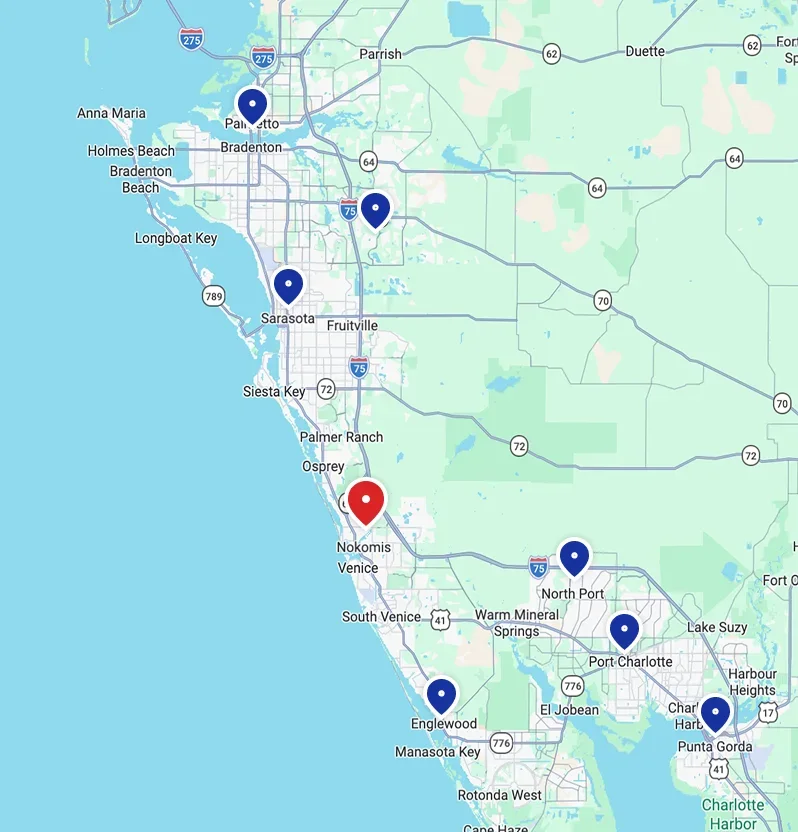
Seasonal Heat Pump Maintenance Across Nokomis & Surrounding Communities
We provide professional heat pump maintenance and tune-ups throughout Nokomis and the surrounding area. Regularly scheduled care keeps your system efficient and reliable, from coastal Sarasota neighborhoods to the greater Port Charlotte area.
Our heat pump maintenance service territory includes:
Not Sure If We Reach You?
Not sure if we service your exact location? Call us at (941) 488-5359 or use our contact form to confirm — we cover the broader Sarasota-Charlotte County corridor.
Complete Heat Pump System Coverage
Maintenance is the foundation of reliability. When repairs are needed, we’re ready.
Keep Your Heat Pump
Healthy & Efficient
Regularly scheduled professional tune-ups
Catches small problems before they become emergencies
Residential & commercial plans available
Serving Nokomis & the Sarasota area since 1958
Regular maintenance is one of the smartest investments in your heat pump’s reliability and lifespan. Small problems caught early prevent expensive emergencies later. At Superior Heating and Cooling, our maintenance plans keep your heat pump performing at its best with regularly scheduled professional care.
Our technicians understand heat pump operation intimately. We measure refrigerant pressures, test electrical components, verify capacity, and clean coils with the precision that catches problems other shops miss. Every tune-up includes a detailed report documenting your system’s condition, so you see exactly what we found and what we recommend. Over multiple visits, this documentation shows us whether your system is aging gracefully or developing concerning trends.
Your heat pump runs harder than traditional AC systems because it operates in both heating and cooling modes for nearly half the year each — that extended duty cycle demands consistent professional care. Both residential and commercial plans are available — contact us for current plan details and pricing.
We make enrollment simple: choose a plan, schedule your first appointment, and we’ll keep your system efficient and reliable for years. When repairs are needed, our heat pump repair team is ready with the same expert care, and our maintenance plan keeps you ahead. Don’t wait for a breakdown — enroll today and join local families who’ve stayed ahead of problems through proactive care.